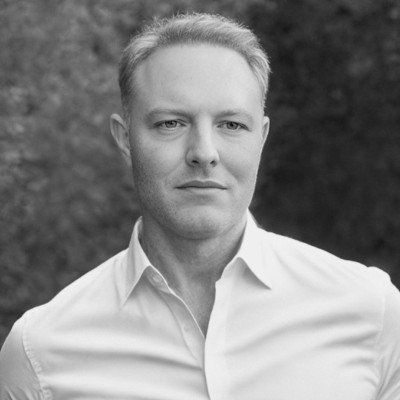
<!-- personal homepage -->

dominic

title: PhD Researcher

focus: Persistent Cognition Systems

status: Building

<a href="#research">publications</a>

<a href="#about">curriculum vitae</a>

<a href="#brain">architecture</a>

<a href="#contact">contact</a>

Last updated: March 2026

System Active

Persistent
Cognition

NanoBotv0.9.0

Calibration

22.6 / 25

Drift

0.003

uptime:

homeostasis: nominal

Memory, doctrine, enforcement, continuity. The gap between stateless chat and a mind that compounds.

<!-- about -->

Curriculum Vitae

Education

Ph.D. Cognitive Science

2020 – Present

Research Interests

  • - Persistent cognitive architectures
  • - Memory crystallisation and doctrine enforcement
  • - Calibration drift in personalised AI systems
  • - Executive control and intent routing
  • - Human-AI continuity across time

Experience

Independent Researcher

Cognitive Systems, 2020 – Present

Strategy & Technology

Various, 2018 – Present

Skills

Python, PyTorch, LangChain, Neo4j, FastAPI, Cognitive Modelling, Systems Architecture, Technical Writing

<a href="cv.pdf">Download full CV (PDF)</a>

Philosophy

Why build a cognitive substrate?

The question isn't whether AI can remember you. It's whether it can build a coherent model of you that sharpens over time.

Most AI systems are stateless interfaces layered on raw intelligence. The missing layer is governance: memory with doctrine, calibration with enforcement, continuity with intent.

A persistent cognitive operator doesn't just store context. It predicts, acts, compares, and updates. The architecture work provides precision. The building provides truth.

"The goal is not to store more chat history. It's to build a cognitive substrate that gets measurably sharper at reading you, challenging you, and acting for you — over time."

<!-- publications -->

Publications

Towards Persistent Cognitive Operators: Memory, Doctrine, and Enforcement in Long-Horizon AI

arXiv preprint, 2025

[preprint]

Calibration Drift in Personalised AI Systems: Detection, Attribution, and Correction

Workshop on Human-AI Alignment, 2024

[workshop]

Binder-Based Executive Control for Multi-Module Cognitive Architectures

Conference on Cognitive Systems, 2025

[under review]

<a href="scholar">Google Scholar</a>

<a href="orcid">ORCID: 0000-0000-0000-0000</a>

Active Projects

What I'm building

NanoBot

activev0.9

Persistent cognitive operator with memory crystallisation, homeostasis, doctrine enforcement, and calibration-driven response shaping.

Binder

developmentv0.1

Executive function layer routing competing module inputs into a single coherent response. Inspectable attribution traces from day one.

Calibration Ledger

researchalpha

Prediction accuracy tracking per cognitive domain. Measures how well the system models the user over time.

Routing quality has repeatedly proven more important than adding more raw intelligence.

<!-- architecture -->

System Architecture

Overview

NanoBot is a persistent cognitive architecture — not a chatbot. It maintains a durable model of the user across sessions, calibrates to individual cognitive patterns, and self-corrects through closed feedback loops. Core loop: predict, act, compare, update.

Core Components

  • Memory Store: Crystallised doctrine + mutable live state
  • Binder: Executive function layer for competing module inputs
  • Homeostasis: Live internal state — uncertainty, urgency, cognitive load
  • Metacognition: Critic layer scoring and rewriting weak outputs
  • Calibration Ledger: Prediction accuracy by domain, hit/miss tracking
  • Drift Engine: Commitment monitoring and identity drift detection

Technical Stack

Python / PyTorch / LangChain / Neo4j / FastAPI / Custom calibration protocols

<a href="docs">Read the technical documentation</a>

Live Architecture
Memory StoreBinderMetacognitionDrift EngineHomeostasisCalibration

Hover over nodes to explore the architecture

<!-- contact -->

Get in Touch

email: dominic@dominic.ac

twitter: @dominic

github: github.com/dominic

<!-- I read all emails. Response time: ~48h -->

Let's Connect

Interested in collaboration?

Open to discussing research in persistent cognition, cognitive architecture, or serious applications of AI to human-AI continuity.